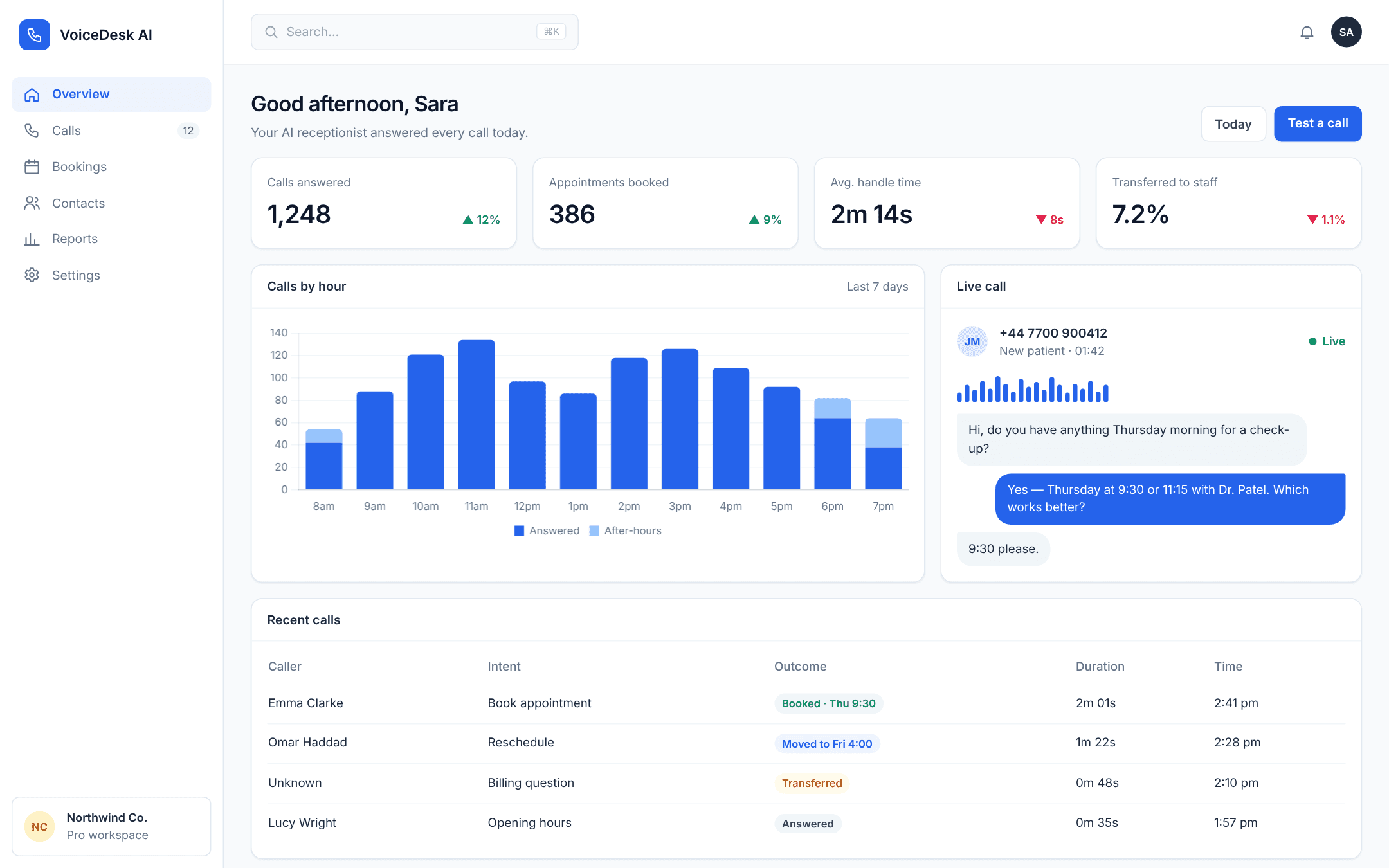
The call flow
- The call connects to the voice agent, usually forwarded from your existing number.
- Speech is transcribed in real time and the AI interprets what the caller needs.
- The agent replies in a natural voice, asking follow-up questions where needed.
- It checks calendars or systems, books or updates appointments, and confirms details.
- A summary is logged and, where needed, the call is transferred to staff.
What it does well
AI receptionists handle routine, high-volume calls consistently: booking, rescheduling, opening hours, directions and simple intake questions. They answer instantly, at any hour, and never put callers on hold during busy periods.
Where people still matter
Complaints, sensitive conversations and complex decisions should go to your team. A good setup recognises these situations early and transfers the caller with context, so nobody has to repeat themselves.
Getting it right
Success depends on clear scripts, accurate business information, sensible escalation rules and regular review of call transcripts. We recommend telling callers they're speaking with a virtual assistant and always offering a way to reach a person.
The technology behind a voice agent
- Telephony: connects the phone call to the system, usually via call forwarding.
- Speech-to-text: converts the caller's words to text in real time.
- Language model: understands the request and decides the response or action.
- Tools: calendar, CRM and knowledge base the agent can consult or update.
- Text-to-speech: replies in a natural-sounding voice with low latency.
Measuring success
- Answer rate — the share of calls answered without a wait.
- Resolution rate — calls completed without human help.
- Bookings created by the voice agent.
- Transfer rate and reasons, to improve scripts.
- Caller feedback and complaint volume.
Privacy and compliance
Calls can contain personal and sometimes sensitive information. Inform callers that calls may be recorded and handled by a virtual assistant, store transcripts securely, limit access and agree retention periods. In regulated industries such as healthcare, keep the assistant to administrative tasks and route clinical questions to qualified staff.
Frequently asked questions
How natural do AI receptionists sound?
Modern voice agents sound natural and respond quickly, though they work best with clear scripts and good audio.
Can it handle multiple calls at once?
Yes. Unlike a single receptionist, a voice agent can answer many calls simultaneously.
What languages are supported?
Many languages are supported depending on the speech and voice providers chosen; we test quality for your languages.